From Experimentation to Commercial Reality
The global autonomous systems and vehicles market is entering a decisive phase.
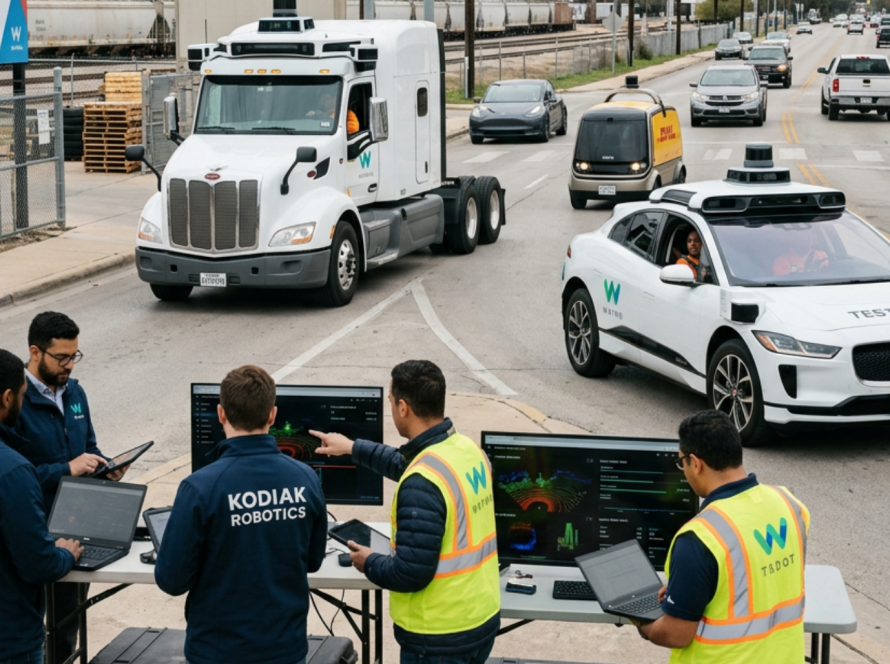
What was once confined to pilot programs and controlled testing environments is now transitioning into commercial deployment across multiple sectors-from passenger vehicles and robotaxis to logistics, agriculture, and industrial automation.
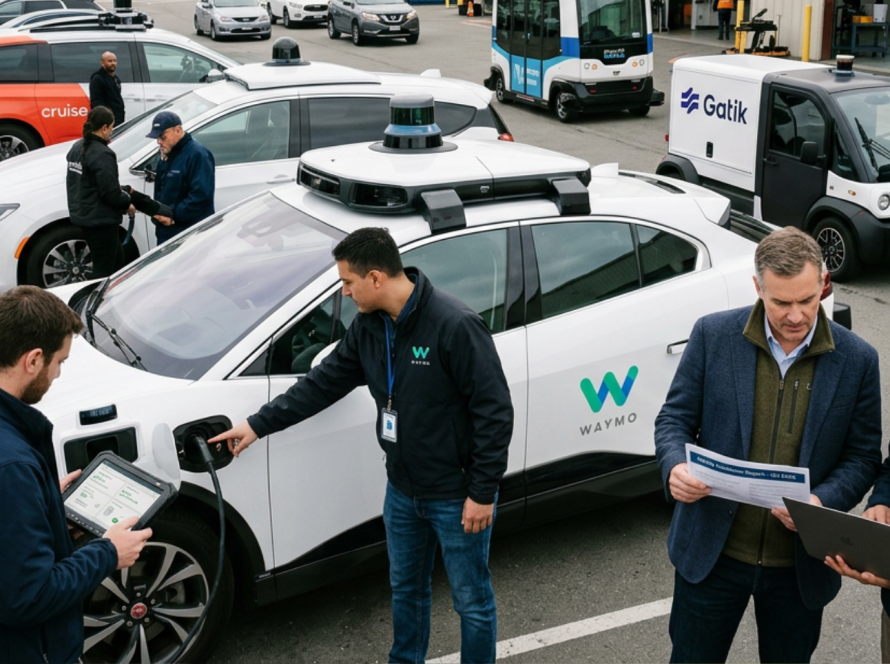
With companies like Waymo already operating commercial robotaxi services, the industry is crossing a critical threshold:
autonomy is no longer theoretical-it is operational.
A Multi-Sector Transformation Engine
Autonomous systems are not limited to self-driving cars. The market spans a wide ecosystem:
- Passenger vehicles (ADAS to full autonomy)
- Robotaxis and mobility-as-a-service platforms
- Autonomous trucking and logistics
- Agricultural and industrial automation
- Marine and aerial autonomous systems
This breadth positions autonomy as a horizontal technology layer transforming multiple industries simultaneously.
Key Growth Drivers: Safety, Efficiency, and Labor Economics
1. Road Safety Imperatives
Human error accounts for nearly 94% of global road accidents, creating a compelling case for automation.
Autonomous systems have the potential to:
- Reduce fatalities and injuries
- Improve traffic efficiency
- Enhance overall road safety
2. Global Labor Shortages
The transportation sector faces acute workforce constraints.
In markets like the U.S., truck driver shortages exceed 80,000, with similar trends emerging globally.
Autonomous technology enables:
- 24/7 operations without fatigue
- Reduced dependency on human drivers
- Scalable logistics networks
3. Operational Efficiency Gains
Autonomous systems unlock measurable economic benefits:
- Optimized routing and fuel efficiency
- Platooning for reduced energy consumption
- Lower total cost of ownership (TCO)
For enterprises, this translates into margin expansion and productivity gains.
Technology Inflection: AI, Sensors, and Computing Power
The rapid evolution of enabling technologies is accelerating commercialization:
- Sensor fusion systems: LiDAR, radar, cameras, ultrasonic sensors
- AI-driven decision-making: deep learning, transformer models
- High-performance computing: trillions of operations per second
- Connectivity layers: V2X communication and HD mapping
Notably, LiDAR costs have declined dramatically-from over $75,000 to under $500-making mass-market deployment economically viable.
Autonomy Levels: Where the Market Stands Today
The industry follows the classification framework defined by the Society of Automotive Engineers.
Current market reality:
- Level 2 / 2+: Dominant today (hands-free highway driving)
- Level 3: Entering commercial deployment
- Level 4: Operational in robotaxi fleets in select cities
- Level 5: Long-term aspiration
Automakers such as Mercedes-Benz and BMW are already leading in Level 3 certified systems, while Level 4 deployments are expanding in urban environments.
Robotaxis and Autonomous Logistics: The Economic Core
The most immediate commercial impact is emerging in:
Robotaxis
- Fleet-based models
- Geofenced deployments
- Mobility-as-a-Service (MaaS) revenue streams
Autonomous Trucking
- Hub-to-hub logistics optimization
- Significant cost savings in long-haul operations
- Faster path to profitability compared to passenger vehicles
Together, these segments are expected to drive early revenue and scale.
Challenges: The Roadblocks to Full Autonomy
Despite rapid progress, critical challenges remain:
- Regulatory fragmentation across regions
- High initial costs and unclear ROI timelines
- Edge-case handling and system reliability
- Cybersecurity and data privacy risks
- Consumer trust and adoption barriers
For many markets, technology readiness is ahead of regulatory readiness.
Global Impact: Redefining Mobility and Supply Chains
The autonomous revolution extends far beyond transportation.
Key global implications:
- Restructuring of logistics and supply chains
- Transformation of urban mobility models
- Reduction in accident-related economic losses
- Creation of new data-driven business models
- Convergence of automotive, AI, and semiconductor industries
Autonomous systems will become a core pillar of the digital economy.
Executive Insight: Strategic Imperatives for Leaders
For C-suite executives across industries:
- Invest in autonomy as a long-term strategic capability
- Form partnerships across the mobility and tech ecosystem
- Align with regional regulatory developments proactively
- Prioritize AI, data, and software capabilities
- Evaluate new business models (MaaS, TaaS, data monetization)
Conclusion: The Defining Technology of the Next Decade
The autonomous systems and vehicles market is not just another innovation cycle-it is a structural transformation of how people and goods move globally.
By 2036, autonomy is expected to be deeply embedded across industries, reshaping:
- Transportation
- Logistics
- Urban planning
- Industrial operations
The winners in this space will not just build autonomous vehicles-they will control the ecosystems that enable them.