The global autonomous driving market is entering a decisive growth phase, underpinned by rapid technological maturation, expanding real-world deployments, evolving regulatory acceptance, and rising consumer confidence.
Valued at US$170.22 billion in 2024, the market is projected to reach US$668.64 billion by 2033, expanding at a compound annual growth rate (CAGR) of 17.63% between 2025 and 2033. The scale of growth reflects a transition from experimental autonomy to commercially viable mobility systems spanning private vehicles, logistics, public transport, and shared mobility.
Technology Breakthroughs Redefine Autonomous Capabilities
Advances in sensor fusion, artificial intelligence, and onboard computer platforms are redefining what autonomous systems can achieve in complex environments.
Leading manufacturers are now deploying multi-modal perception stacks combining LiDAR, radar, and high-resolution vision, delivering full 360-degree situational awareness. Neural-network–driven systems such as Tesla’s latest Full Self-Driving architecture and Waymo’s fifth-generation Driver platform demonstrate substantial gains in detection range, response accuracy, and cost efficiency.
At the computing layer, next-generation platforms capable of trillions of operations per second are enabling vehicles to:
- Anticipate pedestrian and vehicle behavior seconds in advance
- Navigate dense urban zones with dynamic obstacles
- Respond intelligently to emergency scenarios and construction zones
These capabilities mark a shift from rule-based automation to predictive, learning-driven autonomy.
Regulation Shifts from Barrier to Market Enabler
Regulatory frameworks are gradually evolving from restrictive oversight toward conditional enablement, particularly for Level 3 and Level 4 automation.
Jurisdictions such as parts of the United States and Asia-Pacific have begun certifying systems where legal responsibility shifts from driver to manufacturer under defined operating conditions. This regulatory clarity is critical for scaling deployment, unlocking insurance innovation, and accelerating fleet-based autonomy.
However, inconsistencies across regions remain a key friction point, reinforcing the importance of regulatory harmonisation for global expansion.
Urban Deployment and Robotaxis Reshape Mobility Economics
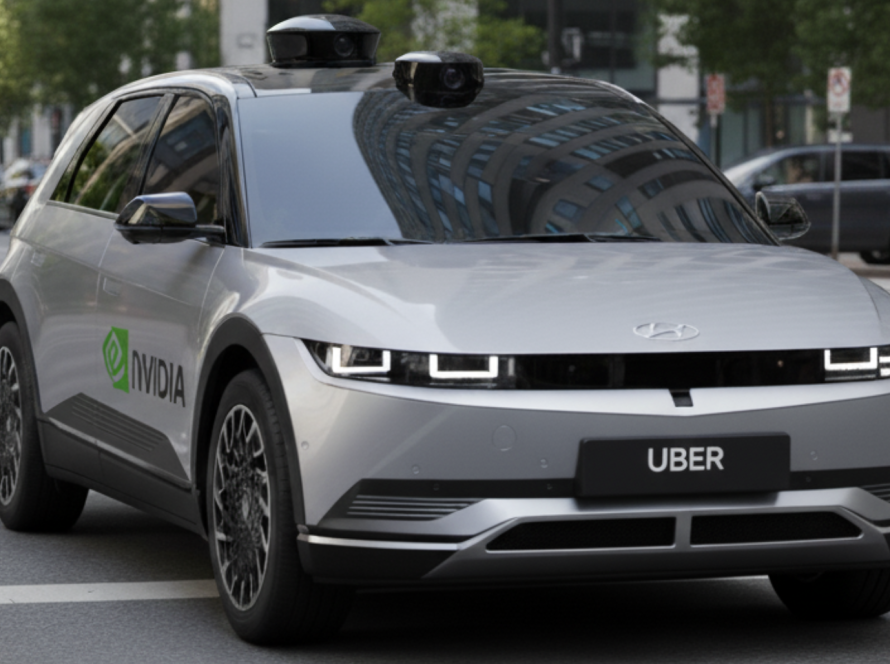
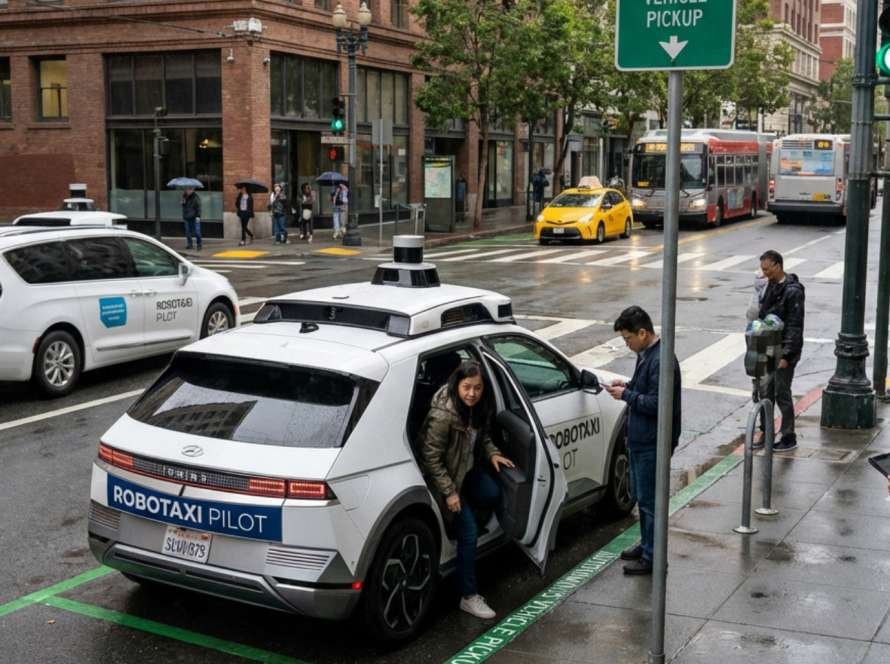
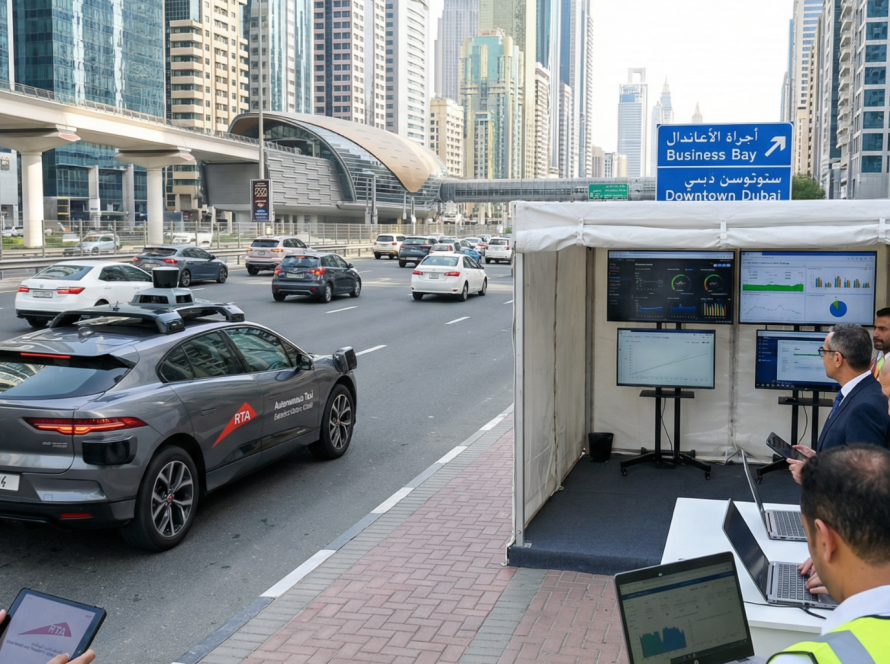
Urban environments are becoming the primary proving ground for autonomous systems. Robotaxi services, autonomous shuttles, and driverless delivery fleets are moving from pilot programs into revenue-generating operations.
Mobility-as-a-service models are disrupting traditional vehicle ownership by:
- Charging per mile rather than per vehicle
- Eliminating labour costs
- Enabling continuous, high-utilisation fleets
Subscription-based autonomy features and data monetization strategies are further diversifying revenue streams, transforming vehicles into software-defined mobility platforms.
Robotaxi services moving from pilots to commercial-scale deployment read more
Connectivity and Infrastructure Power Scalable Autonomy
Autonomous driving depends on more than vehicle intelligence alone. 5G, V2X communication, edge computing, and satellite connectivity are becoming foundational infrastructure layers.
Ultra-low latency networks enable:
- Real-time hazard warnings
- Dynamic map updates
- Vehicle-to-infrastructure coordination
Edge computing reduces reliance on distant data centers, while satellite redundancy ensures continuity in rural and remote environments. Together, these systems support the shift toward networked transportation ecosystems rather than isolated autonomous vehicles.
Electrification and Energy Systems Enable Sustainable Scaling
The computational intensity of autonomous systems has accelerated convergence with electric powertrains, which better support sustained energy demand.
Large-capacity batteries, solid-state technologies, wireless charging, and hydrogen fuel cells are being explored to meet the needs of:
- Robotaxi fleets
- Autonomous freight corridors
- Continuous-operation logistics vehicles
These energy innovations are essential to making autonomy commercially and environmentally viable at scale.
Manufacturing, Supply Chains, and Strategic Partnerships
The autonomous driving market is triggering significant investment across semiconductors, sensors, and vehicle manufacturing infrastructure.
Automakers and technology firms are increasingly relying on strategic alliances to:
- Share development costs
- Accelerate time to market
- Secure resilient supply chains
Localized manufacturing hubs, vertically integrated raw material sourcing, and automated quality control systems are becoming competitive differentiators as production volumes rise.
Why This Market Matters
For executives across automotive, logistics, urban infrastructure, energy, and technology sectors, autonomous driving represents:
- A shift from product sales to platform-based mobility economics
- New regulatory and liability models reshaping risk management
- Data-driven revenue opportunities extending beyond transportation
The winners will be those who align technology readiness, regulatory engagement, infrastructure integration, and ecosystem partnerships early.
From Vehicle Autonomy to Intelligent Mobility Systems
Looking ahead, the autonomous driving market is evolving toward fully interconnected mobility ecosystems, where vehicles, infrastructure, energy systems, and cities operate as unified digital networks.
As autonomy transitions from novelty to necessity, it will reshape:
- Urban planning
- Freight and logistics efficiency
- Public transport accessibility
- Human interaction with mobility
What is emerging is not merely self-driving vehicles-but a redefinition of transportation itself.